(De)constructing poetry
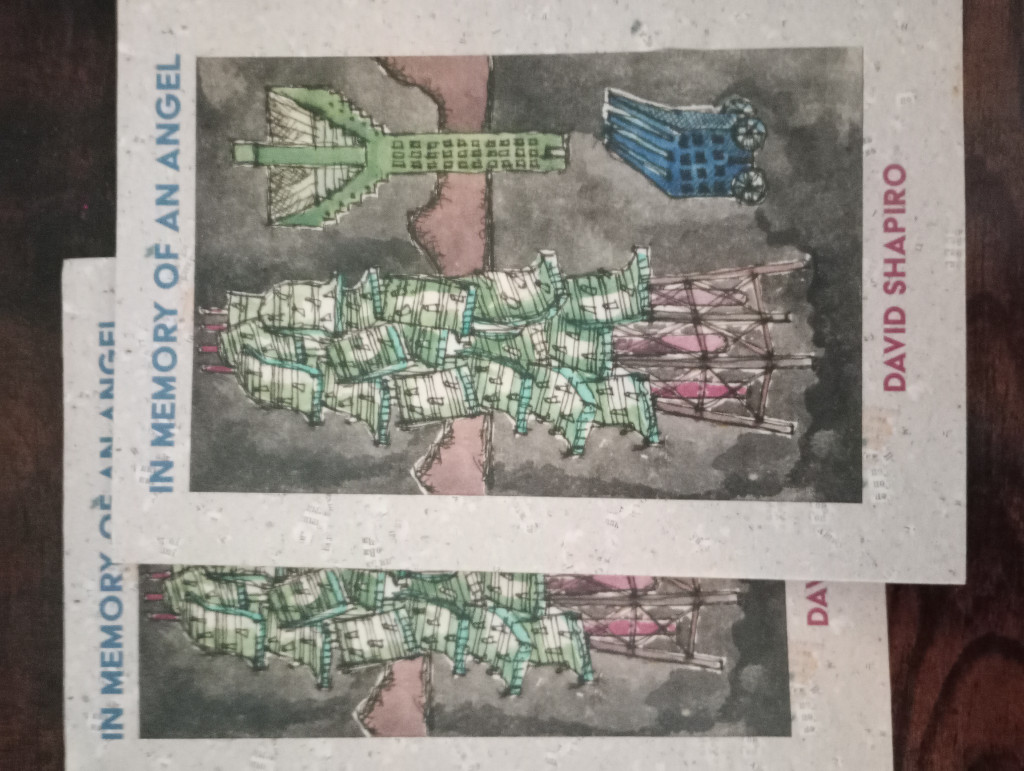
On 29 May, 2025, in Słupsk, Poland, I conducted a workshop devoted to the poetry of David Joel Shapiro. My intention was to introduce the students of Pomeranian University to the oeuvre of the late poet as well as to explore with them three poems, each representing one specific streak of Shapiro’s poetic diction.
The three poems of my choice reflected the three domains of my research, that is the study of the simile, the I – you relations, and the problem of musicality.
Poetry does not have to be analyzed; it can be felt, read, digested, meditated upon, and simply enjoyed. But I wanted to go deeper than the surface of what is esthetically pleasing or linguistically challenging, hence the division of Shapiro's work into the three pillars.
I saw nothing like a soul
The first category is about the simile, which looks very simplistic - at least at first sight. Some critics treat it as a less demanding metaphor. I approach it differently - if an intellectual poet like Shapiro used such a non-complicated figure of speech so often, he must have had a good reason for doing so.
Your fingers were our cathedral
The I-you relations underpin many of Shapiro's poems. These relations are reflected in little dialogs, or pseudodialogs, as some critics see them, where we can see how the position of the speaker changes several times throughout a poem, and as a result the reader can detect more than one character speaking. Such poems sometimes read as little dramas.
Forget, forget!
Musicality seems pretty obvious as a topic because Shapiro had begun as a musician - a child prodigy aged five. Then, at fifteen, he turned to literature and soon abandoned music. He could no longer combine poetry with practising violin for hours every day. But what about music in this poetry? Again, at first sight, melody and rhythm are not easy to find in the poems written in free verse. But if you look again, you will find there instances of anaphora, alliteration, obsessive repetitions, incantation...